
Cancelled a support? What your provider can and can’t charge
Short notice cancellation rules and small habits that stop avoidable draining of your NDIS plan.
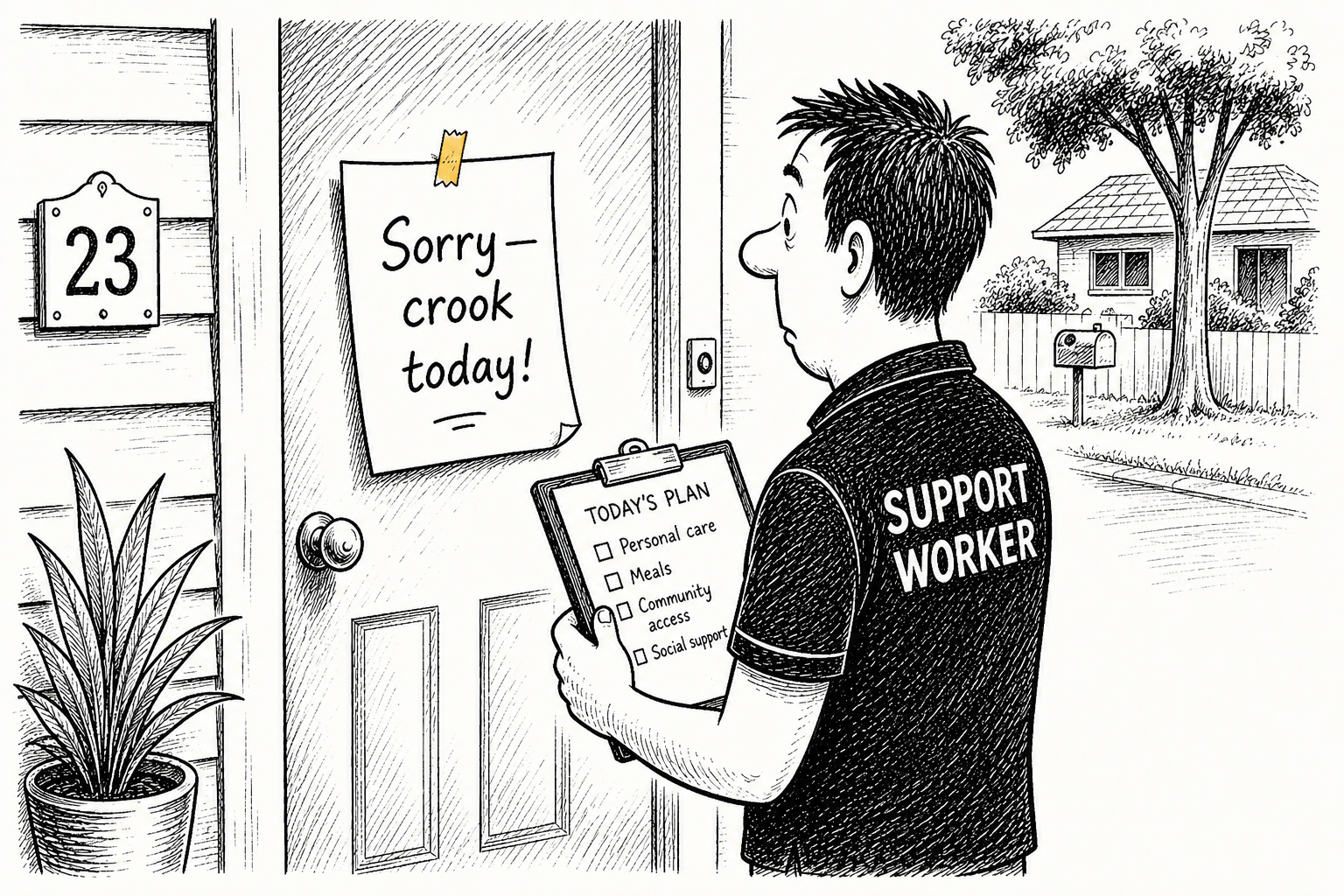
Everyone cancels sometimes. You wake up unwell, the car won’t start, or a hospital appointment lands on top of your usual support. The NDIS has clear rules about what happens to your funding, when that happens and knowing them can save you a surprising amount of money over a plan.
How much notice you need to give
Two different notice periods apply, depending on the type of support:
Support worker supports - up to 7 days notice required.
Everything else, including therapy and allied health - up to two clear business days notice.
Give less notice than that or simply not be there at the agreed time and place and it counts as a short notice cancellation.
What your provider can charge
For a short notice cancellation or a no-show, a provider can claim up to 100% of the agreed fee for that session, and it comes out of your plan budget, not theirs. A cancelled three-hour community access shift is three hours of Core funding gone, with no support received.
But “can” is not “must”. Three conditions have to be met before a provider is entitled to charge:
The cancellation terms are written into your service agreement. If your agreement says nothing about cancellations, the provider has not set up the right to charge you.
The provider could not find other billable work for that worker.
The provider still has to pay the worker for the time.
Providers can also waive the fee at their discretion, and many do, especially for a first occurrence, a hospital admission, or something genuinely outside your control. It never hurts to ask.
Why this quietly drains budgets
Three hours cancelled once a fortnight, at roughly $70 an hour, is more than $5,000 across a year. That is money gone from Core Supports with nothing delivered and it is one of the most common reasons a plan runs short before its end date.
What changed on 1 July 2026
For allied health, cancellations are now claimed against a dedicated item number ending in _CA, at the full direct service rate. That is good news for transparency: a cancelled OT session should now appear on your statement as its own visible line item, so it is worth checking your claims.
For support worker supports, the NDIA had not republished the full rules document for 2026–27 at the time of writing. Until it does, the 2025–26 cancellation rules remain the working reference, priced at the new 2026–27 rates.
If a charge doesn’t look right
Ask the provider which clause of your service agreement the charge is based on.
Check the claim in the myplace portal, or ask your plan manager and you can see the date, the item and the amount.
Raise it with the provider first, in writing.
If it is not resolved, contact the NDIS Quality and Safeguards Commission on 1800 035 544.
Three habits that help
Cancel as early as you know. A text the night before is better than nothing, and providers remember who communicates.
Ask to reschedule rather than cancel. A moved shift often is not a cancellation at all.
Read the cancellation clause before you sign, and keep a copy you can find again.
References
NDIS Pricing Arrangements and Price Limits (cancellation rules) - https://www.ndis.gov.au/providers/pricing-arrangements
NDIS Pricing Schedule 2026–27 - https://www.ndis.gov.au/providers/pricing-arrangements/pricing-updates
NDIS Quality and Safeguards Commission - making a complaint - https://www.ndiscommission.gov.au/participants/complaints
My Plan Manager - a participant’s guide to cancellations - https://myplanmanager.com.au/participants-guide-to-cancellations/
Information current as at 1 September 2026. This article is general information, not advice about your individual plan.
