
Plan Reassessments Have Changed: What You Need to Know
From 27 August 2026 there is a new way to ask the NDIS for a new plan.
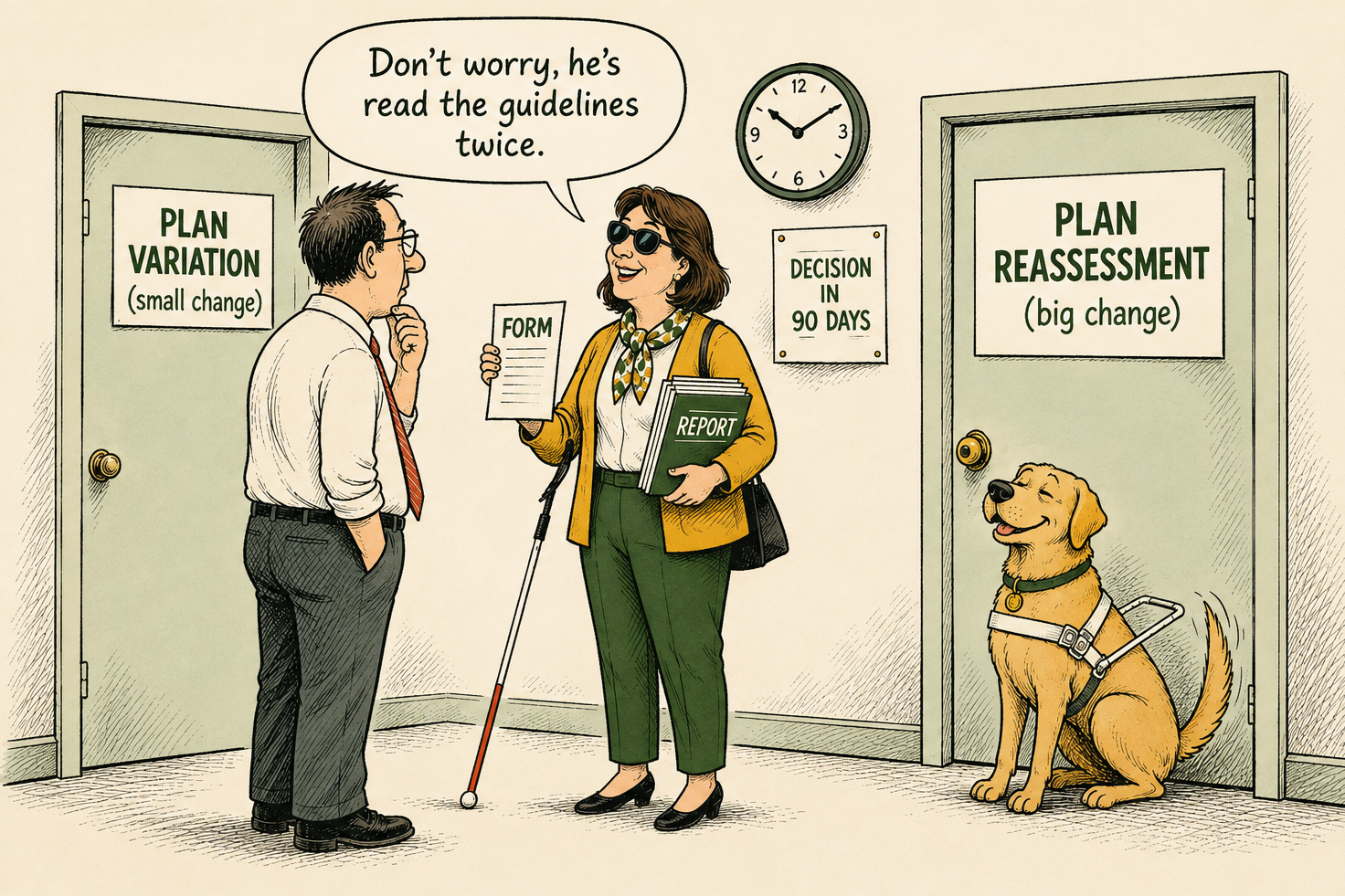
A plan reassessment is when the NDIS reviews, reassesses and builds you a brand-new plan. It is not a small tweak to your current one. The NDIA will only do a reassessment when there has been a significant and ongoing change to your support needs.
Under the new NDIS laws, three things have changed about how you ask for one.
Only certain people can request a plan reassessment
A plan reassessment can now only be requested by:
you, the participant
your nominee
your child representative, if you are under 18
That is the full list. A provider, a support coordinator or a therapist can no longer lodge the request on your behalf, and you cannot give consent for them to do it for you. We can absolutely help you prepare the request and gather the evidence, but the request itself needs to come from you or your representative.
You must use the official form
A phone call or an email is no longer enough. There is now a specific Plan Reassessment Request form that has to be completed and submitted. You can download it here:
Plan reassessment request form
Plan variation request form (for smaller changes, see below)
What goes on the form
Your form needs to explain two things clearly:
What has changed;
Why that change means your current plan no longer works.
You then attach evidence to back it up. Evidence often needs to come from a GP or another health professional, and reports from your allied health team carry a lot of weight here.
Please note: Old reports that were already used to build your current plan will not show the NDIA anything new.
A decision within 90 days
Once the NDIA has all the information it needs, it has 90 days to make a decision. It can agree to reassess your plan, decline to reassess it, or decide to vary your current plan instead.
Reassessment or variation? Which is the correct one for the situation?
Choosing the wrong pathway is the most common reason a request stalls, so it is worth a moment of thought.
Plan Variation
What it does: Changes part of your current plan
Best for: Urgent, minor or short-term changes
Typical examples: Crisis or emergency funding, adding recommended assistive technology, fixing an error, changing how your funding is managed, updating your goals.
Plan Reassessment
What it does: Replaces your plan with a new one
Best for: Significant and ongoing changes to your support needs
Typical examples: A permanent change in your health or living situation, a big and lasting increase in the support you need, moving into supported living
References
NDIS, Changes to plan reassessments, 27 August 2026
NDIS, What is a plan variation
This article is general information only and reflects NDIS guidance current at 3 September 2026.
You Might Also Like


The rules for asking the NDIS for a new plan changed on 27 August 2026. Only you, your nominee or your child representative can make the request, it has to go in on the official form, and the NDIA then has 90 days to decide. Here is the plain English version, plus the form download links and how a reassessment differs from a variation.